Welcome to 2026 the 10th International Conference on Big Data and Internet of Things (BDIOT2026)
 ∷
∷

∷
 ∷
∷
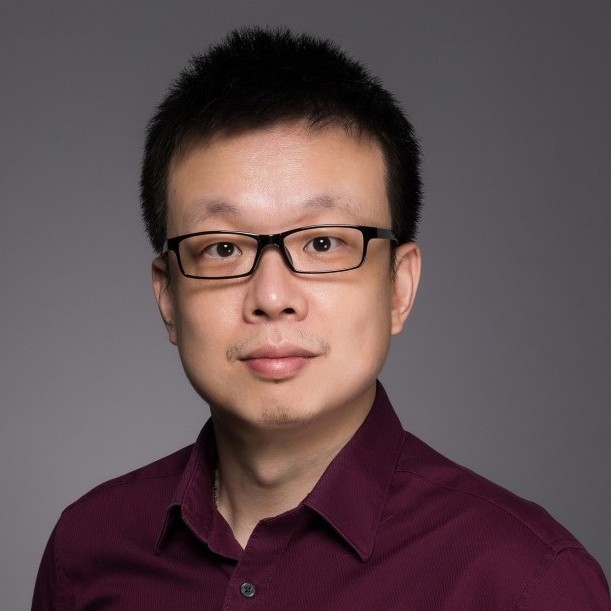
Biosketch: Rui Yang received his Ph.D. degree and B.Eng degree from National University of Singapore (NUS). His research interests are in Industrial AI and Brain-Computer Interface (BCI). Dr. Yang is named a Highly Ranked Scholar (top 0.05%) in Transfer Learning by ScholarGPS, ranking 8th globally over the past five years, and is the Director of Centre for Intelligent Control and Optimization (XJTLU-AUO Collaborative Research Centre). Dr. Yang serves as Associate Editor for esteemed international SCI/ESCI indexed journals, including IEEE Transactions on Instrumentation and Measurement (IF=7.0), Neurocomputing (IF=6.7), Cognitive Computation (IF=7.4) and International Journal of Network Dynamics and Intelligence (IF=15.3).
Speech Title: EEG Benchmarking Needs a Task Specification Layer: NeuroDoc for Rulebook-Guided, Executable Benchmark Construction
Abstract: EEG foundation models increasingly rely on aggregated multi-dataset corpora, yet public EEG datasets still lack a consistent task-level interface specifying how heterogeneous recordings should be converted into machine learning tasks. Existing standards organize files and metadata, but they do not formalize EEG dataset-to-task mapping, leaving task definitions scattered across papers, supplementary materials, and code. We present an entry-based framework for EEG dataset-to-task mapping in which each dataset is represented by a human-readable task document paired with a dataset-specific task kernel that binds task semantics to executable logic. On top of this framework, we release a community-reviewed EEG benchmark corpus covering 50+ public datasets and 250+ task definitions spanning multiple paradigms and task formulations. We also introduce NeuroDoc and NeuroAudit as supporting tools for rule-guided generation, review, and maintenance under a shared entry rulebook. Finally, we use the resulting benchmark to test four EEG foundation models and show that the task interfaces can be instantiated in downstream evaluation. Together, these contributions turn heterogeneous public EEG datasets into reusable, auditable, and executable benchmark interfaces for cross-dataset training, adaptation, and evaluation.
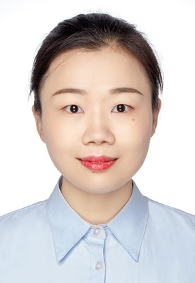
Biosketch:
Pan Yu is currently an Associate Professor at Beijing University of Technology, China. She is a recipient of the Young Talent Support Program sponsored by the Beijing Association for Science and Technology, and a member of the Broad-Spectrum Human Support Systems Technical Committee of the Asian Control Association.
Her research mainly covers robust disturbance rejection control for complex uncertain systems, intelligent robot control, and high-performance electromechanical system control. Dr. Yu has presided over a number of scientific research projects, including the Young Scientists Fund of the National Natural Science Foundation of China. Focusing on disturbance perception, robust control and online optimization of uncertain systems, she has conducted systematic and in-depth research, and proposed a series of innovative theories and methods including the two-degree-of-freedom control framework for uncertain systems, tunable nonlinear disturbance estimators, and learning-based optimal control strategies for complex environments. She has established an integrated theoretical system ranging from disturbance modeling and state estimation to control optimization.
Dr. Yu has published more than 40 papers as the first and corresponding author in prestigious international journals, such as Automatica, IEEE Transactions on Industrial Electronics, IEEE/ASME Transactions on Mechatronics, and International Journal of Robust and Nonlinear Control. Her research findings have attracted extensive attention from international peers.
Speech Title: Online Data-Driven Feature Extraction for Cyclostationary Disturbance Rejection Control in Rotating Machinery
Abstract: Vibrations in rotating machinery (e.g., motors and gearboxes) exhibit cyclostationarity due to their rotational generation mechanisms. Typical events such as gear meshing, bearing fault passing, and motor pole alignment repeat at fixed rotational intervals in the angular domain, making the statistical moments vary periodically with the rotation angle rather than being time-invariant. Such periodicity in statistics defines the disturbance as cyclostationary. However, owing to the a priori unknown and time-varying nature of cyclostationary disturbances, real-time mitigation of their adverse effects on control performance remains challenging. This talk develops an online data-driven feature-extraction method for cyclostationary disturbances that integrates the Hilbert transform and fast Fourier transform (FFT) to extract disturbance features from measured system outputs. Unlike conventional observers, the proposed method updates the extracted feature weights via gradient descent based on a newly proposed performance index. Closed-loop stability and performance are rigorously analyzed, and a systematic design procedure is provided. Finally, the effectiveness and advantages of the proposed method are demonstrated through experimental validation on a dual-motor test platform and comparisons with existing representative approaches.

Biosketch: Dr. Azhar Imran is an Associate Professor at Beijing University of Technology (BJUT), China, and a Senior Member of IEEE. His research focuses on Artificial Intelligence, machine learning, and biomedical applications, particularly explainable and multimodal AI systems for healthcare. He has published over 100 research articles in leading venues, including IEEE Transactions on Medical Imaging (TMI), IEEE Transactions on Neural Networks and Learning Systems (TNNLS), and top Elsevier journals such as Neural Networks and Information Sciences. He is a recipient of the Young Marconi Award, the Outstanding Award from the Ministry of Education, China, and has been recognized among the Top 2% Scientists Worldwide (Stanford University ranking). Dr. Imran is a frequent keynote speaker at international conferences, contributing to advancements in intelligent biomedical systems and precision healthcare.
Speech Title: Artificial Intelligence-Driven Intelligent Healthcare Systems: Integrating Big Data, IoT, and Explainable AI for Future Digital Medicine
Abstract: The rapid advancement of artificial intelligence (AI), big data analytics, and Internet of Things (IoT) technologies is transforming the landscape of modern healthcare. This invited talk will explore how intelligent healthcare systems can integrate multimodal data sources, including medical images, physiological signals, electronic health records, and IoT-enabled monitoring devices, to support accurate diagnosis, personalized treatment, and predictive healthcare.
The presentation will discuss recent developments in deep learning, multimodal AI, and explainable artificial intelligence (XAI) for building reliable and clinically meaningful healthcare solutions. Particular emphasis will be placed on AI-assisted medical imaging, clinical decision support systems, real-time health monitoring, and secure data-driven healthcare platforms.
The talk will also highlight key challenges associated with the deployment of AI in healthcare, including data privacy, interoperability, model transparency, clinical validation, and responsible AI development. Finally, future opportunities involving edge AI, digital twins, federated learning, and human–AI collaboration will be discussed as pathways toward next-generation intelligent healthcare ecosystems.
This presentation aims to provide insights into how AI, IoT, and big data can work together to create sustainable, efficient, and patient-centered healthcare systems.